
Key Takeaways
- The “Target” Factor: A tree is only a hazard if it has a “target” like your home, car, or a public sidewalk.
- Invisible Decay: Many trees that look green on top are hollow or rotting from the inside out.
- The Power of Nor’easters: Boston’s unique coastal climate and heavy snow load act as the ultimate “stress test” for weak trees.
- Root Zone Integrity: Heaving soil and fungal brackets at the base are “Code Red” signs of foundation failure.
- Proactive Mitigation: Pruning and cabling can often save a high-value tree if structural issues are caught early.
In the historic neighborhoods of Boston, from the leafy streets of Jamaica Plain to the coastal backyards of Southie, mature trees are a vital part of the landscape. They provide shade, boost property value, and add character to our New England homes. However, these giants face a unique set of challenges: urban soil compaction, coastal wind gusts, and the brutal weight of “heavy” New England snow.
As a homeowner, it is your responsibility to know when a beautiful asset has turned into a dangerous liability. Trees don’t usually fall without warning; they leave a trail of “clues” that indicate their structural integrity is failing. Understanding these seven signs can help you act before the next major storm decides for you.
1. The Sudden or Progressive Lean
Not every leaning tree is a hazard. Many trees grow at an angle to find sunlight, developing “tension wood” to support their weight over decades. However, a sudden lean is a dire emergency. If you notice a tree has shifted after a storm, or if you see freshly exposed soil and cracked roots on the side opposite the lean, the root plate has failed.
In Boston’s frequently saturated soils, “root heave” is common. When the ground becomes a “plastic” slurry during heavy rains, a top-heavy canopy can simply pivot out of the earth. If the tree is leaning toward a “target”, your roof, your neighbor’s fence, or power lines, it requires immediate professional intervention.
2. V-Shaped “Included Bark” Unions
Take a look at where the main trunks of your tree meet. If they form a wide “U” shape, the connection is likely strong. However, if they form a tight “V” shape, you are looking at a structural flaw known as included bark.
As the two stems grow in diameter, they begin to push against each other rather than fusing. Over time, bark becomes trapped between the stems, preventing a solid wood bond. In a high-wind event or under the weight of an ice storm, these “V” unions act like a wedge, causing the tree to split down the middle. This is one of the most common causes of property damage in Massachusetts residential areas.
3. Deep Vertical Cracks and Cavities
A crack that extends deep into the wood, or worse, two cracks on opposite sides of the trunk, is a sign that the tree is physically splitting apart. While surface-level bark shedding is normal for some species like Sycamores or Birches, deep fissures that reach the inner “heartwood” indicate a loss of structural strength.
Cavities or hollows are also significant. While a small hole from a lost limb might house local wildlife, a large cavity at a major junction or at the base of the trunk means the tree’s “structural cylinder” is compromised. If more than 30–40% of the tree’s diameter is hollow, it may no longer be able to support its own weight.
4. Fungal Growth (The “Conk” of Death)
If you see mushrooms or “shelf” fungi (conks) growing out of the trunk or the root flare at the base, the tree is rotting from the inside. These fungi are the “fruiting bodies” of internal decay. By the time they appear on the outside, the fungus has likely been eating away at the tree’s structural cellulose and lignin for years.
In Boston, we often see Ganoderma or “Chicken of the Woods” at the base of older Maples and Oaks. This indicates root rot or butt rot. Because the roots are the “anchor” of the tree, any fungal presence in this area is a “Code Red” hazard, as the tree’s foundation is literally being dissolved.
5. Dead Wood and “Widow-Makers”
Dead branches are the most frequent cause of tree-related injuries. A “widow-maker” is a large, dead limb that is still hanging in the canopy but is no longer attached. These can fall at any time, even on a perfectly calm day, due to gravity and ongoing decay.
Look for branches that have no leaves during the summer, or bark that is peeling away to reveal smooth wood underneath. In Boston’s urban environment, trees often experience “dieback” from the tips of the branches toward the center. This is a sign of stress, but large-diameter dead wood over a sidewalk or driveway is a liability that must be pruned away immediately.
6. Soil Heaving and Root Damage
The root system of a tree typically extends 2–3 times wider than the branches. In Boston, construction, sidewalk repairs, and utility trenching often sever these critical “anchor roots.” If you see the soil around the base of the tree lifting or “bubbling” during a windstorm, the root system is no longer holding.
Furthermore, if you notice mushrooms popping up in a circle around the tree (a “fairy ring“), it could indicate that the subterranean roots are decaying. Without a healthy root plate, the tallest oak is just a standing stick waiting for the right gust of wind to topple it.
7. Species-Specific Weakness
Some trees are biologically more “dangerous” than others in the New England climate.
- Bradford Pears: Infamous for splitting in half during any storm with winds over 40 mph.
- Silver Maples: Fast-growing but brittle wood that tends to drop heavy limbs.
- Norway Maples: Common in Boston, these are prone to girdling roots and sudden branch drop.
- Ash Trees: Currently being decimated by the Emerald Ash Borer, which leaves the wood brittle and prone to shattering like glass.
Why Boston Storms are the “Great Equalizer”
Our local climate doesn’t give weak trees a pass. Between the Nor’easters that bring heavy, wet snow and the summer microbursts that funnel wind through narrow city streets, your trees are under constant mechanical stress. A tree that survived last winter may have developed a “stress crack” that will cause it to fail during the next thunderstorm.
Frequently Asked Questions
Is a leaning tree always dangerous?
No. If the lean is old and the tree has “corrected” its growth at the top, it is likely stable. If the lean is new or if the soil is moving, it is a high-priority hazard.
Can cabling and bracing save my tree?
Often, yes! If a tree has a “V” union or a heavy limb, high-strength steel or synthetic cables can be installed to limit movement and prevent splitting. This is a great way to save high-value, historic trees.
How do I know if the rot is “too far gone”?
A professional arborist can perform a “resistograph” test, which involves drilling a tiny needle into the wood to measure density. This tells us exactly how much sound wood is left.
Does insurance cover a fallen tree?
Most homeowners’ policies cover damage if a tree falls on a structure. However, if the tree was a “known hazard” that you neglected to maintain, you could face challenges with your claim.
Conclusion
Your trees are a vital part of your Boston home’s story, but they require a watchful eye. By identifying these seven signs of instability, from “V” unions to fungal conks, you can make informed decisions about pruning, cabling, or removal. Don’t wait for the sound of cracking wood in the middle of a blizzard to find out if your tree is safe.
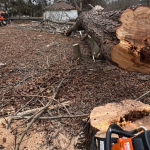
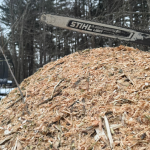
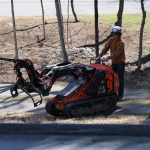
At Dover Country Trees, we understand the unique structural challenges facing Boston’s urban canopy. Our expert team specializes in tree trimming and pruning, ensuring all routine work is done during the safe, dormant season to preserve your canopy’s health. Should a sudden Nor’easter strike, our 24/7 emergency tree service is ready to act quickly, sealing wounds and removing hazards like limbs overhanging your roof. From the strategic removal of infected trees and deep stump grinding to providing fresh mulch for a healthy landscape, we provide the precision your property requires. Since 1986, we have been the trusted choice for homeowners seeking to balance beautiful landscapes with total property safety.
Tree Instability: Assessment and Action Checklist
| Condition | Risk Level | Recommended Action |
| Sudden leaning | Critical | Call for emergency assessment immediately |
| Large trunk cracks | High | Schedule a professional inspection right away |
| Mushrooms or fungus at base | Moderate to High | Inspect for internal decay and structural weakness |
| Dead or bare branches | Varies | Consult an arborist to determine if pruning or removal is needed |
| Overhanging power lines | High | Contact a licensed tree service for safe clearance |
Final Advice
If you notice any of these warning signs, do not wait for a storm to force the issue. A professional assessment from an arborist can determine if the tree can be saved through specialized care or if it must be removed to protect your property. For expert service in the Boston area, call Dover Country Trees.
Reviewed by a Certified Arborist
This structural analysis has been reviewed by a qualified specialist to ensure all information regarding tree mechanics and New England environmental stress meets industry standards.
Author Bio: Dover Country Trees Editorial Team
The team at Dover Country Trees has spent decades managing the unique urban forest of the greater Boston area, specializing in hazard mitigation and property safety.